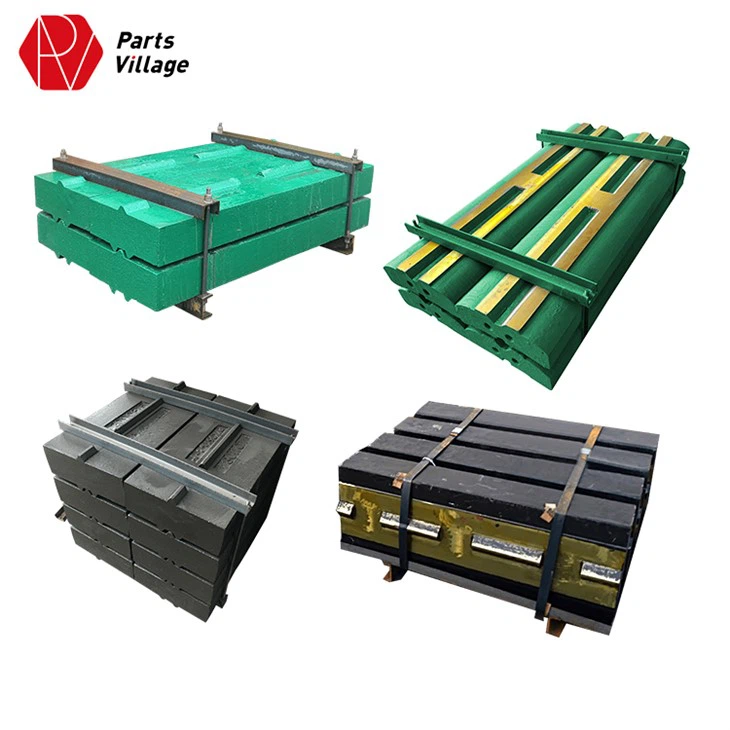
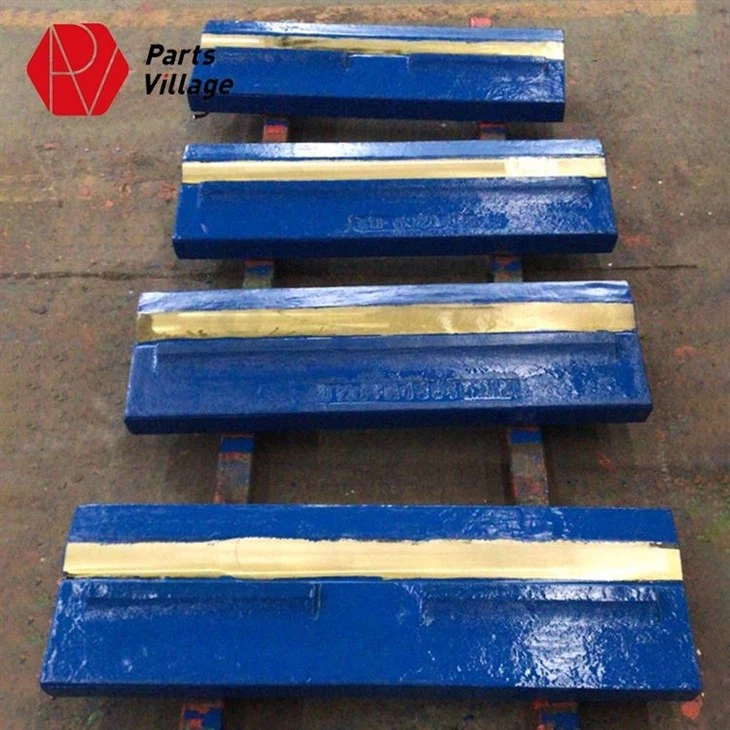
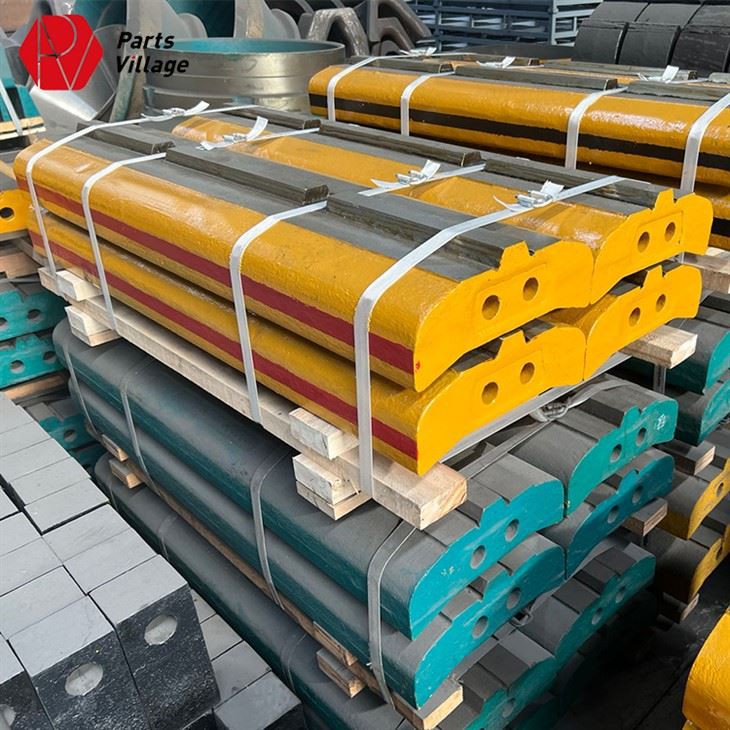
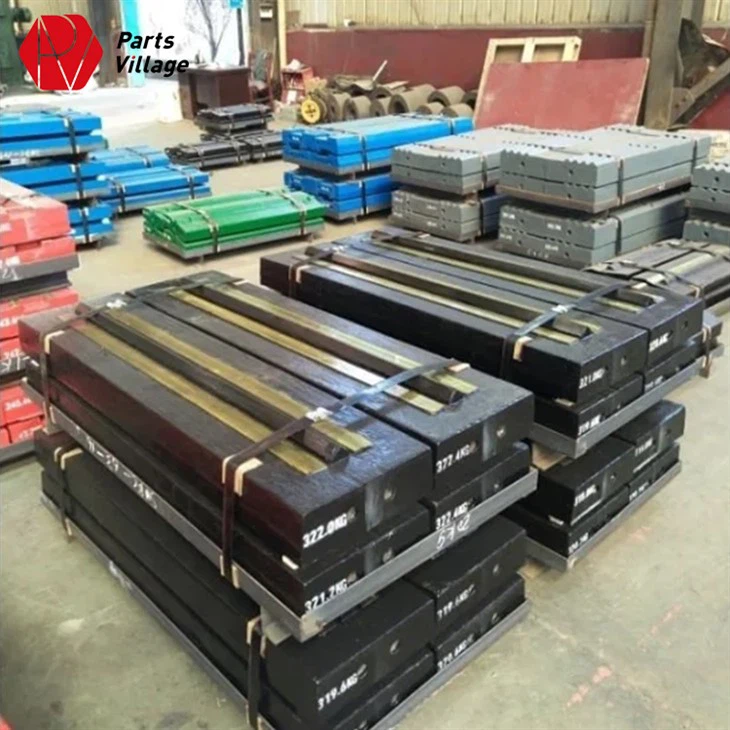
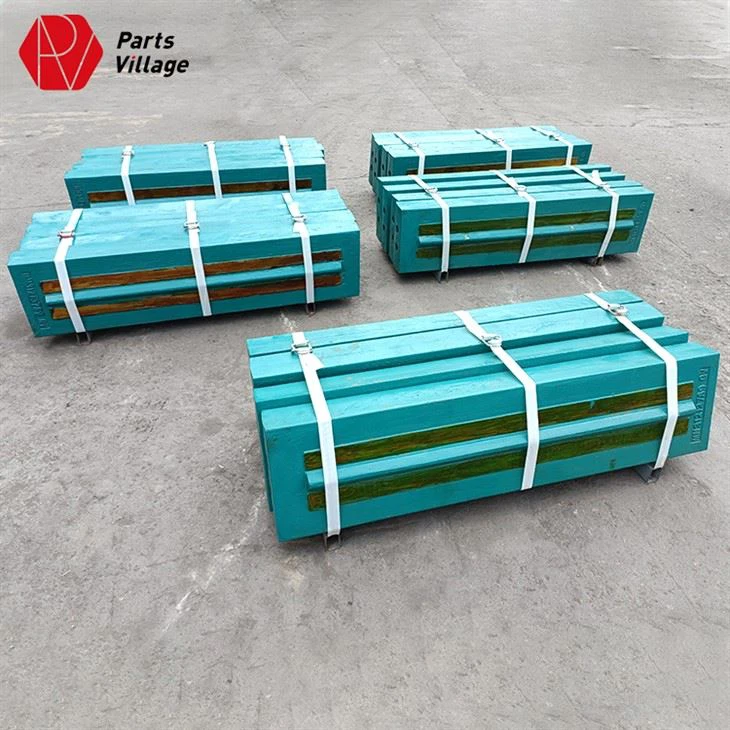
Rock crusher blow bars are important wear parts in impact crusher, which help break down the materials into smaller pieces and ensures that the final product is of consistent size and shape. Additionally, the rock crusher blow bars ensure that the impact crusher operates efficiently, reducing the need for constant maintenance and repairs, which makes sure better performance of impact crushers.
Rock Crusher Blow Bars are the main impact components installed on impact crushers. They crush rocks by impacting them through high-speed rotation. They are widely used in the secondary or tertiary crushing process in mining, construction and sand and gravel production.
Advantages
Wear-Resistant Alloy Material
Rock Crusher Blow Bars are made of high-alloy steel containing chromium. Grain uniformity is inspected using a scanning electron microscope and laser surface hardening is used to ensure a surface hardness of HRC58 or higher.
High-Efficiency Impact Crushing
Computational fluid dynamics is used to optimize the hammer head shape. Combined with the centrifugal force generated by high-speed rotation, the impact force is increased by 15%, enhancing material crushing and increasing output per unit time.
Advanced Heat Treatment Technology
A multi-stage temperature-controlled normalizing and tempering process is employed, and X-ray diffraction analysis is used to optimize the crystal structure, resulting in a hard surface and tough core microstructure, improving impact toughness and durability.
Cooling Channel Design
The internal cooling channel structure optimizes fluid flow through numerical simulation, reducing surface temperature by 20%. This prevents material softening due to high temperatures and ensures continuous and efficient hammer operation.
Applications
1. Mining Industry
During the crushing process of ore, rock crusher hammers are used to process various minerals such as iron ore, copper ore, bauxite, etc.
2. Building Materials Industry
Used for the crushing of stone materials, including sand, gravel, limestone, etc., as important raw materials in construction and road engineering.
3. Cement Production Industry
In cement plants, hammers are used to crush limestone and crush it into fine particles for further production use.
4. Metallurgical Industry
Used for crushing metal ores, especially ores that need further refining, such as copper ore, bauxite, etc.
5. Road Construction Industry
In highway construction, rock crusher hammers help break large pieces of stone to meet the standard particle size requirements for road construction and maintenance.
OEM other famous brand crusher wear parts are available!
We also provide jaw crusher wear part, fixed and swing jaw plate, toggle plate, etc.
Q: What is the primary function of rock crusher blow bars, and how do they contribute to the crushing process?
A: Rock crusher blow bars serve as the key striking component in impact and hammer crushers. Their primary function is to convert the kinetic energy generated by the rotor into the mechanical force needed to break down the rock material. When the rotor spins at high speeds, the blow bars impact the rock, causing it to shatter. This repeated action reduces the size of the material, eventually leading to the production of crushed aggregate. The effectiveness of the blow bars in transferring energy and withstanding the resulting stress determines the efficiency and capacity of the entire crushing operation.
Q: What materials are commonly used to manufacture rock crusher blow bars, and why are they suitable for this application?
A: The most common material for manufacturing rock crusher blow bars is high-manganese steel, which is known for its exceptional work-hardening ability. When subjected to repeated impacts, this material becomes progressively harder, enhancing its resistance to wear. Additionally, high-manganese steel has a unique microstructure that allows it to absorb and dissipate impact energy effectively, reducing the risk of cracking. Other materials, such as chromium-iron alloys, are also used, particularly in applications requiring higher abrasion resistance or where the rock being crushed is exceptionally hard. These materials are chosen for their ability to balance strength, toughness, and wear resistance under the extreme conditions present in a crushing chamber.
Q: What design features are incorporated into rock crusher blow bars to enhance their performance and durability?
A: Rock crusher blow bars are designed with several features to enhance their performance and durability. One such feature is the use of multiple-piece construction, which allows for the replacement of individual segments rather than the entire bar, reducing downtime and costs. The shape and profile of the blow bar are also optimized to maximize energy transfer and ensure efficient crushing. Heat treatment processes, such as normalization and tempering, are employed to enhance the mechanical properties of the material, providing a balance between toughness and hardness. Additionally, features like cooling channels and surface treatments are incorporated to manage heat and improve wear resistance. The overall design of the blow bar takes into account the specific requirements of the crushing operation and the anticipated operating conditions to ensure optimal performance and longevity.
Q: How is the lifespan of rock crusher blow bars determined, and what factors contribute to their longevity?
A: The lifespan of rock crusher blow bars is influenced by several factors, including the material quality, operating conditions, maintenance practices, and the design of the blow bars themselves. The material's ability to resist wear and withstand repeated impacts is crucial, as is the consistency of the feed material and the proper management of operational parameters. Regular maintenance, including inspections for wear and cracks, and timely replacement of worn parts are essential to extending the service life of blow bars. Additionally, implementing best practices such as using high-quality materials, following the manufacturer's recommendations, and conducting routine maintenance can significantly contribute to the longevity of rock crusher blow bars.
Q: How do environmental factors affect the performance and wear of rock crusher blow bars?
A: Environmental factors, such as temperature, humidity, and the presence of corrosive substances, can significantly impact the performance and wear of rock crusher blow bars. Extreme temperatures can affect the material properties of the blow bars, making them more brittle or less resilient. Humid conditions can promote corrosion, especially in the presence of moisture or salty air, leading to premature wear and failure. Additionally, the presence of corrosive substances in the feed material or the atmosphere can accelerate wear. To mitigate these effects, it is important to operate the crusher in a controlled environment whenever possible and to protect the blow bars from exposure to corrosive substances. Regular maintenance and the use of protective coatings or treatments can also help reduce the impact of environmental factors on blow bar performance and wear.
Q: What are the implications of using improperly sized rock crusher blow bars for the efficiency and safety of the crushing operation?
A: Using improperly sized rock crusher blow bars can have several negative implications for the efficiency and safety of the crushing operation. If the blow bars are too small, they may not be able to withstand the forces exerted by the rotor, leading to premature failure and potential damage to the crusher. On the other hand, if the blow bars are too large, they may not fit properly within the crushing chamber, reducing the effective space for material to be processed and leading to decreased efficiency and throughput. Additionally, improperly sized blow bars may cause uneven wear patterns, increased vibration, and noise, all of which can negatively impact the safety and performance of the crushing operation. To avoid these issues, it is crucial to select blow bars that are specifically designed for the make and model of the impact crusher and to ensure that they are correctly installed and aligned.
Q: Question: How do advancements in technology impact the design and functionality of rock crusher blow bars?
A: Answer Advances in technology have led to improvements in the design and functionality of rock crusher blow bars. New materials, such as high-chromium alloys and advanced wear-resistant coatings, have been developed to provide better resistance to wear and extend the service life of blow bars. Advanced manufacturing techniques, such as additive manufacturing, have enabled the production of complex and customized blow bar designs that were previously difficult to achieve. Computer modeling and simulation software have also been utilized to optimize the design of blow bars for specific crushing applications, improving their performance and efficiency. Additionally, the integration of sensors and IoT technology into rock crushers has allowed for real-time monitoring of blow bar wear and condition, enabling predictive maintenance and reducing downtime. Overall, technological advancements have contributed to the development of more durable, efficient, and reliable rock crusher blow bars that are better suited to meet the demands of modern mining and quarrying operations.
Q: Are you are factory?
A: Yes,we are factories that produce quarry production and crushing machines and related machine parts more than 20 years
Q: What is the shipping time?
A: Shipping time varies depending on the shipping method and destination but will usually take between 25-30 days.
Q: If you want us recommend a suitable type and best offer for you, please let us know as follows:
A: What is your raw material?
What is the max size of the raw material (mm/inch)?
What is the required output size?
Q: How long is the warranty? Does your company supply related spare parts?
A: The crusher equipment is warranted for one year. And we provide spare parts at reasonable price.
Q: How long is the delivery time?
A: Generally it takes one week if the goods are in stock. Otherwise it needs 25-30 days, and it also depends on the ordered quantity.
Q: What are the payment terms you can accept?
A: Usually, we accept 30% deposit in advance and 70% balance payment before shipping
and if some clients want to pay by letter of credit, after Review, after bank investigation, we will also accept payment by 30% deposit in advance and 70% letter of credit.




 ,
,


