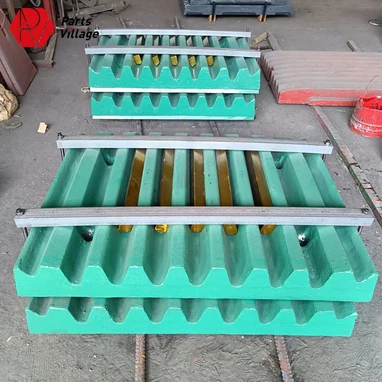
The most important and most frequently replaced wear part of a jaw crusher is its liner. There are many types of jaw crusher liners, and the number of each device varies depending on the brand and model of the jaw crusher. For example, if the jaw crusher is a small jaw crusher, then a jaw crusher will only have two jaw crusher liners, but a large jaw crusher will have six jaw crusher liners.
Jaw Crusher Liner Plate is a wear-resistant liner installed on the movable jaw and fixed jaw of a jaw crusher to protect the jaw crusher from wear and withstand the high-intensity impact force generated when materials are crushed. It is widely used in the coarse crushing process of mining, building materials, metallurgy and other industries.
Advantages
High-Hardness Materials
The Jaw Crusher Liner Plate is made of G450/G500 wear-resistant steel or chromium carbide composite material, achieving a surface hardness exceeding 450 HB.
Wide Compatibility
The liner plate material supports standard fixed and movable jaw plates of various models (such as the C80, C96, GP100, and HP series). Dimensions can be cast or CNC machined to suit each model.
Diverse Installation Methods
It supports a variety of connection methods, including threaded studs, countersunk holes, and spade holes, making it suitable for installation in complex working conditions.
Applications
Sand and gravel production industry
In the process of sand and gravel production, jaw crushers are often used to process various construction sands and stones, such as quartz sand, gravel, etc. The lining can effectively resist the impact and wear of these hard materials.
Glass industry
In the process of glass recycling and crushing, jaw crushers are often used to process waste glass and raw glass. The lining can prevent the equipment from being damaged by fragments and glass residues.
Chemical industry
In the process of crushing chemical raw materials, such as titanium ore, bauxite, etc., the lining of the jaw crusher can effectively withstand the high wear of chemical materials.
Oil and gas industry
In the process of oil and gas extraction, the lining of the jaw crusher can also be used to crush minerals and rocks, such as shale and limestone.
Cone crusher is a type of machine widely used in urban construction, which basically reduces the size of the material with the help of compression, squeezing or breaking down between stationery and moving piece of steel.
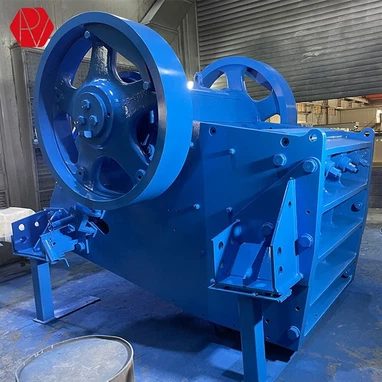
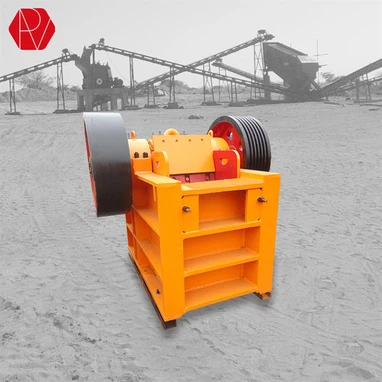
C106 Jaw Crusher is used for coarse and medium crushing operations.It is a good choice for crushing hard and strong corrosive materials with high efficiency.
PE 250x400 Jaw crusher is a large kind of complex tilting crushing equipment. It is widely used in mining, metallurgy, construction, roads, railways, chemical industry, water conservancy, etc.
The PE Series Jaw Crusher adopts anti-wear high manganese,light weight high strength and rigidity and low energy consumption,be the most popular usage in the primary crushing.
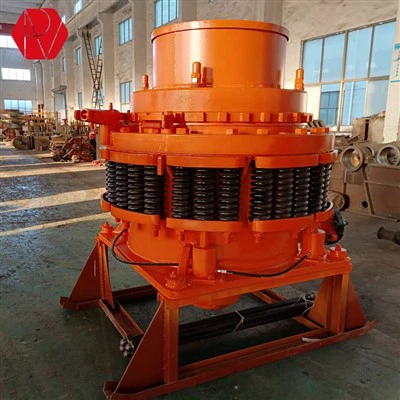
PY Spring cone crusher Machine is suitable to crush all kinds of ores and rocks with medium hardness and above. It has features of reliable structure, efficiency, high capacity, low operating cost, easy adjustment, economical to use and so on.
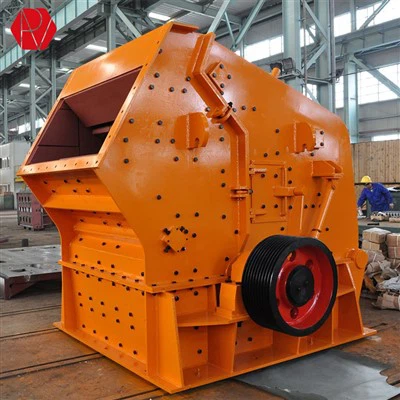
PF series of equipment includes secondary and tertiary impact plate which can handle the materialsless than 100-800mm in the length.lt is suitable to crush the medium hard material with compressiveresistance of 350Mpa. The discharging from impact crusher is small and fine granularity of cubicshape.
It is the most important and frequently replaced wear part of a jaw crusher. There are many types of jaw crusher liner plates, depending on the jaw crusher brand and model. The quantity of each device is also different.
Jaw plate crusher parts is a very important wear parts for jaw crushers, because the quality and service life of the Jaw plate crusher parts directly affect the service life of the jaw crusher.
Jaw crusher liner plate Show:
Production Flow
Common Problem of Jaw Crusher Liner Plate
Q: How do you ensure product quality?
A: We have a strict quality control system in place, and all our products undergo multiple inspections before shipment.
Q: What is your lead time for samples?
A: The lead time for samples usually takes around 7-14 business days. However, this may vary depending on the product and customization.
Q: Do you provide product customization?
A: Yes, we can provide product customization depending on your requirements. Please let us know your specific needs.
Q: Do you have any New Year promotions?
A: Sure, We have many promotions, please contact us!
Q: What are crusher liners?
A: Essentially, they operate like compression crushers. The liners of the cone crusher are crucial for protecting the mantle and the concaves inside the compression chamber from wear and tear. These are easily replaceable parts and have to be switched out often to maintain optimal performance.
Q: What material is used for jaw crusher liners?
A: For jaw crusher liner plate, people conventionally use high manganese steel material. The wear resistance and strengthness of high manganese steel are insufficient under the condition of strong impact and high stress chiseling wear. Tungsten carbide is the most wear-resistant material for jaw crushers.
Q: What is the use of toggle plate in jaw crusher?
A: A toggle plate and tension rods hold the pitman tight near the bottom of the moving swing jaw. The toggle plate is designed to perform like a fuse and protect the crusher in the event that an uncrushable material enters the crushing chamber.
Q: What are the different types of liner plate?
A: Two types of liner plate are available: the mill scale type and the hot-dipped galvanized type that excels in corrosion resistance. Galvanized treatment ensures excellent corrosion resistance and long service life of permanent structures, such as catchment wells.
Q: What is the material composition of liner plate?
A: Liner sheet is commonly made from high-strength materials like hardened steel, manganese steel, or other alloys with excellent wear-resistant properties.
Q: What is the purpose of a crusher?
A: Crushers are machines used to reduce the size of rocks, stones and ore. They are often utilized in aggregates production, construction material recycling and in mining operations.
Q: What are the parts of a crusher?
A: A power plant's crusher consists of several major parts. These include the crusher body, the drive motor, the support bearings, the rotor, the hammers or blades, the breaker plates and the adjustable cage bars.
Q: What is the most common type of jaw crusher?
A: The Blake crusher is the most common type of jaw crusher employed today. The Blake type jaw crusher has a fixed feed area and a variable discharge area. Blake type crushers come in various sizes and are commonly used for primary and secondary crushing roles.
Q: What is the difference between hammer crusher and jaw crusher?
A: Hammer Crusher: Typically produces a more rounded product with a wider size distribution. It is suitable for producing relatively coarse particles. Jaw Crusher: Generally produces a more cubical product with a narrower size distribution. It is suitable for producing finer particles.
Q: What is a crusher shredder?
A: The shredder is one of the crushers, that is to say, the shredder can also be called a kind of crusher. The shredders we refer to are more directional, but the shredders are different. The types of shredders are more extensive, the types of models, and the raw materials they face are different.
Q: What is an impact plate?
A: The main function of impact plate in impact crusher is to bear the impact crushing of raw materials be shot from blow bar, and rebound the crushed raw materials back to the crushing area for second crushing.
Q: What are crusher blow bars made of?
A: They are made out of cast steel with various metallurgical ingrediants optimized for a specific applications. Selecting blow bars that match your application is crucial for achieving a long wear life.
Q: What is a blow bar on a crusher?
A: Blow bars are thick slabs of metal, typically some mixture of chrome, that are cast for the purpose of effectively breaking apart material like asphalt, concrete, limestone, etc. Often in sets of 3 or 4, blow bars are inserted into an impact crusher's rotor where they are able to strike material needing processed.
Q: What steel is used for blow bars?
A: Manganese steel has a long history. Today, this steel is used mostly for crusher jaws, crushing cones and crushing shells. In the impact crusher, it is only recommended to use manga- nese blow bars when crushing less abrasive and very large feed material (e.g. limestone).
Q: What are blow bars used for?
A: They are used to crush materials like asphalt, concrete, and stones into small pieces. Blow bars are used in horizontal shaft impact crushers by inserting them into the rotor. During operation, the rotor spins at high speeds and strikes the material to be crushed repeatedly.
Q: What is the use of rock crusher?
A: A rock crusher is a machine designed to reduce large rocks into smaller rocks, gravel, or rock dust. They are typically used in the mining industry and construction to crush rocks into smaller, more manageable pieces, and to produce rock fill material for landscaping and erosion control.